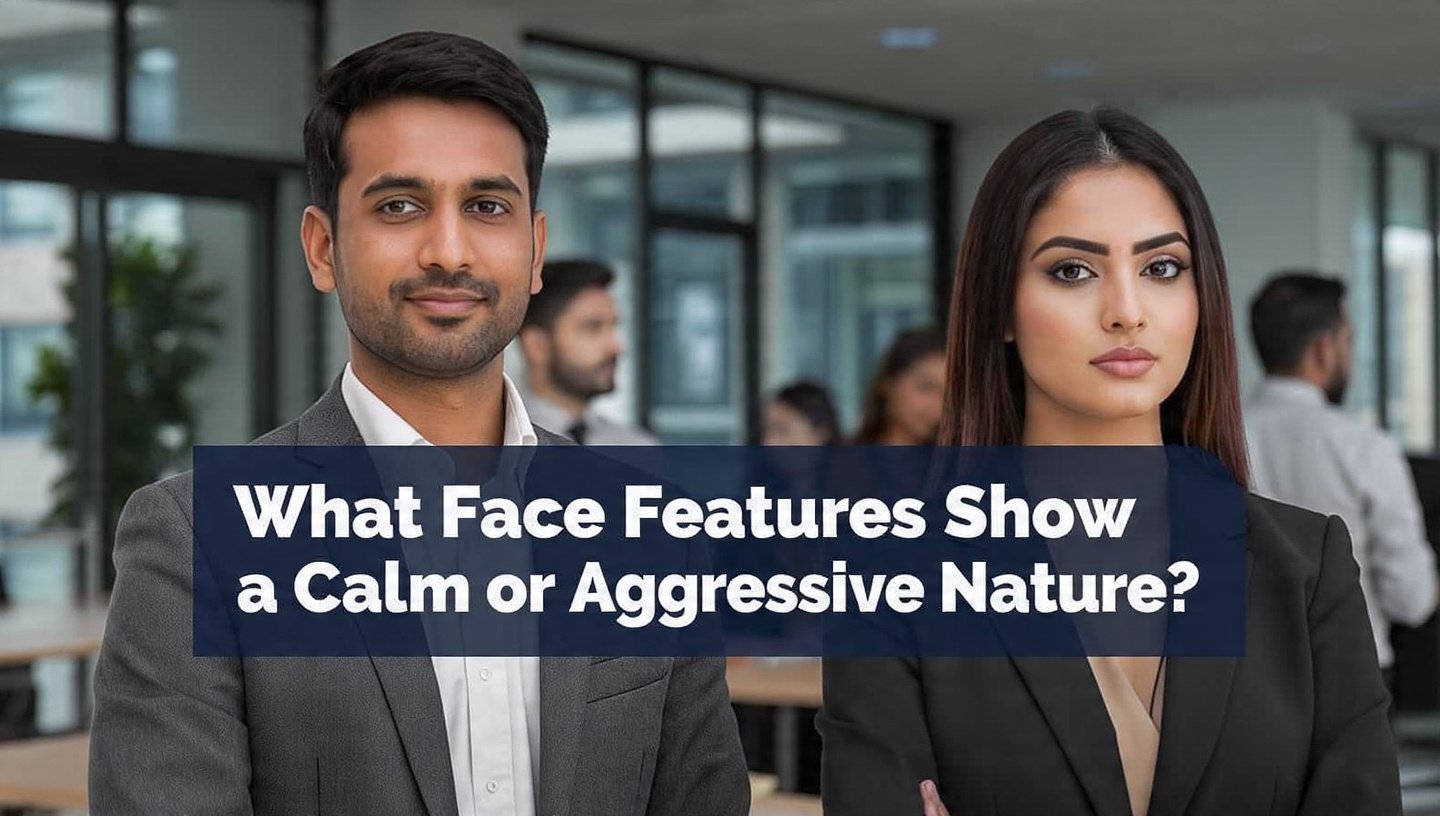
Let me start with a very simple question.Calm
Have you ever met someone who feels peaceful just by looking at them?
And have you also met someone who feels angry or restless, even when they are quiet?
This feeling does not come from imagination.
It comes from observation.
In Samudrik Shastra, an ancient Indian knowledge system, the face is seen as a mirror of the mind.
Your thoughts, emotions, and habits slowly shape your facial features.
So yes—calm and aggressive nature can be understood from the face, but only when done correctly.
Let us understand this step by step, in very easy English.
Understanding Calm and Aggressive Nature in Simple Words
A calm person:
- Thinks before reacting
- Handles stress better
- Does not rush decisions
- Has emotional balance
An aggressive person:
- Reacts quickly
- Gets angry fast
- Feels restless inside
- Acts before thinking
Samudrik Shastra says these qualities slowly appear on the face, eyes, posture, and expressions.
This does not mean a person is “good” or “bad”.
It only shows how their energy flows.
Why the Face Reflects Nature (Samudrik Shastra View)
Samudrik Shastra believes:
“Manas ka prabhav mukh par dikhta hai”
(The mind’s effect is visible on the face)
Your face changes because of:
- Long-term thoughts
- Stress patterns
- Emotional habits
- Lifestyle
- Life experiences
This is why face reading focuses on patterns, not one feature.
Face Features That Show a Calm Nature
Let us look at common face signs that usually show a calm and balanced nature.
Calm Eyes
Eyes are the most important part in face reading.
Calm people usually have:
- Soft eye movement
- Stable eye contact
- No sudden sharp staring
- Relaxed eye muscles
Their eyes look present, not rushed.
In Samudrik Shastra, calm eyes show:
- Mental balance
- Emotional maturity
- Inner stability
Psychology also agrees—relaxed eyes mean a relaxed nervous system.
Balanced Forehead
A calm person often has:
- A smooth or evenly shaped forehead
- No constant tension lines
- Relaxed skin between eyebrows
This shows:
- Clear thinking
- Patience
- Planning ability
Such people do not jump into decisions quickly.
Gentle Facial Expressions
When the face is at rest:
- Calm people look neutral or soft
- No tight jaw
- No clenched lips
Even when silent, their face feels open.
Samudrik Shastra says this shows:
- Control over emotions
- Low internal conflict
Soft Jawline and Relaxed Mouth
A calm nature often shows:
- Jaw not tightly clenched
- Lips resting naturally
- No constant pressure on teeth
This reflects:
- Controlled speech
- Emotional restraint
- Less inner anger
Slow and Stable Blinking
Calm people:
- Blink naturally
- Do not blink too fast
- Do not keep eyes wide open in tension
This is a sign of mental steadiness.
Face Features That Show an Aggressive Nature
Now let us understand signs that often indicate aggressive or restless energy.
Remember:
Aggression does not always mean violence.
It also means inner pressure and fast reactions.
Sharp or Piercing Eyes
Aggressive nature often shows through:
- Very sharp staring
- Less blinking
- Eyes that look tense or restless
Such eyes feel like they are always alert or defensive.
Samudrik Shastra connects this with:
- Strong Mars energy
- Quick reactions
- Low emotional pause
Tight Jaw and Pressed Lips
One strong sign of aggression is:
- Constantly tight jaw
- Pressed or stiff lips
- Teeth grinding habit
This shows:
- Suppressed anger
- Control issues
- Emotional pressure
Psychology also links jaw tension with unresolved stress.
Deep Frown Lines Between Eyebrows
Aggressive or stressed people often have:
- Deep vertical lines between eyebrows
- Even when not angry
This means:
- Overthinking
- Constant mental pressure
- Habit of worry or control
Samudrik Shastra sees this as mental heat.
Stiff Facial Muscles
Aggressive nature may show as:
- Stiff cheeks
- Hard facial posture
- No softness in expressions
Even when smiling, the face feels tense.
This indicates:
- Emotional guarding
- High internal stress
Fast and Sudden Expressions
Such people:
- Change expressions quickly
- React fast to small things
- Show irritation easily
Their face mirrors their quick-trigger mind.
Calm vs Aggressive Nature Is Not Permanent
This is very important to understand.
Samudrik Shastra clearly says:
“Chehra badalta hai, swabhav ke saath”
(The face changes as nature changes)
This means:
- A calm person can become aggressive under stress
- An aggressive person can become calm with awareness
Face reading reads the current pattern, not destiny.
Role of Life Experiences
Life experiences deeply affect facial features.
For example:
- Long stress creates tension lines
- Trauma tightens expressions
- Peaceful life softens the face
That is why face reading must include:
- Observation
- Psychology
- Time factor
Not just one photo or one feature.
Can a Calm Face Hide Aggression?
Sometimes yes.
Some people look calm but:
- Suppress emotions
- Hide anger
- Avoid expression
In such cases:
- Eyes tell the truth
- Jaw tension reveals pressure
- Body language exposes reality
That is why full-face and behavior observation is important.
Why Understanding This Helps in Real Life
Knowing calm or aggressive tendencies helps in:
- Relationships
- Workplace communication
- Parenting
- Leadership
- Personal growth
It helps you respond wisely instead of reacting emotionally.
Face Reading + Psychology = Better Understanding
Modern psychology supports many ideas:
- Stress affects muscles
- Emotions affect expressions
- Habits shape the face
Samudrik Shastra observed this thousands of years ago, without instruments—only observation.
Important Truth You Must Remember
Face reading should:
- Never judge
- Never label permanently
- Never scare people
It should only:
- Increase awareness
- Improve understanding
- Support better decisions
Who Should Use Face Reading?
Face reading is useful for:
- People working with others
- Parents
- Leaders
- Counselors
- Anyone on a self-growth journey
When used ethically, it becomes a powerful awareness tool.
Final Thought
A calm or aggressive nature is not a weakness or strength.
It is simply energy expression.
When you understand your nature:
- You gain control
- You reduce mistakes
- You improve relationships
Face reading does not change people.
Awareness does.
Want Ethical Face Reading Guidance?
For those looking for balanced, psychology-based, and Samudrik Shastra–rooted guidance, you can explore sessions with Ekta Desai.
🌐 Official Links
- Website: https://ekta-desai.com/
- Instagram: https://www.instagram.com/ektadesai_facereader
- Facebook: https://www.facebook.com/EktaDesaiFacereader
- YouTube: https://www.youtube.com/@ektadesaifacereader