Let me ask you something simple about life.
Have you ever looked at an old photo of yourself
and felt surprised?
You may think,
“I was the same person, but my face looks different.”
This is not imagination.
According to Samudrik Shastra,
life experiences slowly change the face.
Let us understand this in very simple English,
step by step, like a calm conversation.
What Samudrik Shastra says about facial changes
Samudrik Shastra is an ancient Indian knowledge system.
It explains one clear idea:
👉 The face is not fixed. It grows with life.
Your thoughts, emotions, habits, and struggles
all leave marks on your face over time.
This is why face reading is not only about birth.
It is also about life journey.
Why life experiences affect the face
Think about daily life.
- Stress tightens muscles
- Happiness relaxes muscles
- Fear creates tension
- Peace softens expressions
When these feelings repeat for years,
the face slowly adapts.
Samudrik Shastra says:
The mind shapes the face through repetition.
How emotions change facial expressions
Emotions play a big role.
Stress and worry
Long-term stress affects:
- eyes
- forehead
- jaw
People with constant worry
often develop tight eyes and deep lines.
Happiness and contentment
People who live with calm and acceptance
often have soft eyes and relaxed faces.
Samudrik Shastra reads these emotional stories
from the face.
How responsibilities reflect on the face
Responsibilities change a person deeply.
When someone carries:
- family pressure
- financial stress
- emotional duties
Their face shows maturity.
Forehead lines may appear.
Eyes may look serious.
This does not mean weakness.
It means life experience.
How struggle and hardship show on the face
People who face long struggles
often develop stronger facial structure.
Samudrik Shastra explains:
Hard life builds inner strength,
and that strength shows on the face.
Jaw becomes firmer.
Eyes become focused.
Struggle shapes character,
and character shapes the face.
How success and confidence change the face
Success also changes the face.
When people gain:
- confidence
- self-respect
- stability
Their posture improves.
Eyes become steady.
Face looks balanced.
Samudrik Shastra connects confidence
with facial harmony.
Can negative experiences damage the face?
Yes, if emotions are not processed.
Long-term anger, fear, or resentment
can harden facial muscles.
This is why Samudrik Shastra emphasizes awareness.
It does not scare people.
It guides them to heal.
Can the face heal and change again?
Yes.
This is very important.
Samudrik Shastra believes:
Nothing on the face is permanent.
When people change:
- mindset
- habits
- emotional patterns
The face slowly softens again.
Healing inside reflects outside.
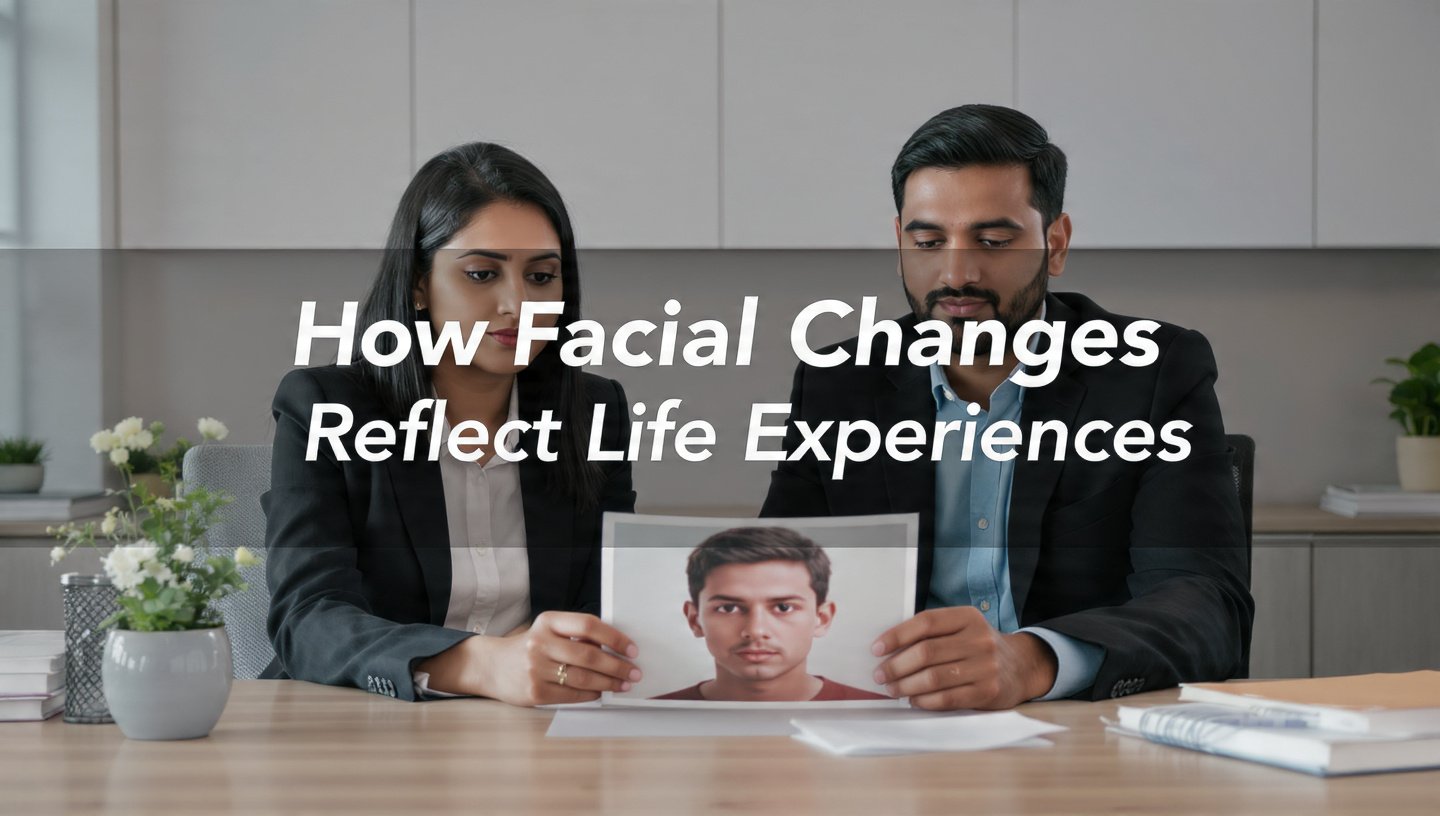
Why old photos are important in face reading
Face readers often compare:
- old photos
- current face
This helps understand:
- emotional journey
- turning points in life
Samudrik Shastra respects time and growth.
Face reading is not judgment
This must be very clear.
Face reading does not say:
“This is bad” or “This is good.”
It says:
“This happened, and it shaped you.”
Understanding brings compassion, not fear.
Why expert guidance matters
Reading life changes on the face needs:
- deep Samudrik Shastra knowledge
- emotional sensitivity
- ethical responsibility
A practitioner like Ekta Desai
uses face reading to help people understand themselves,
not to label or judge them.
Simple truth to remember
Your face is a diary of your life.
Every smile, tear, struggle, and success
leaves a soft mark.
Face reading helps you read that story.
Connect for Guidance
🌐 Website: https://ekta-desai.com/
📸 Instagram: https://www.instagram.com/ektadesai_facereader
📘 Facebook: https://www.facebook.com/EktaDesaiFacereader
▶️ YouTube: https://www.youtube.com/@ektadesaifacereader
Book an Appointment
👉 https://ekta-desai.com/book-appointment/
Your face does not show weakness.
It shows experience, growth, and strength.