Let me talk to you like a parent talking to another parent.
Every parent looks at their child and thinks,
“Why is my child like this?”
“Why is my child so quiet?”
“Why is my child so angry?”
“Why does my child not speak much?”
Children cannot always explain their feelings in words.
But their face speaks all the time.
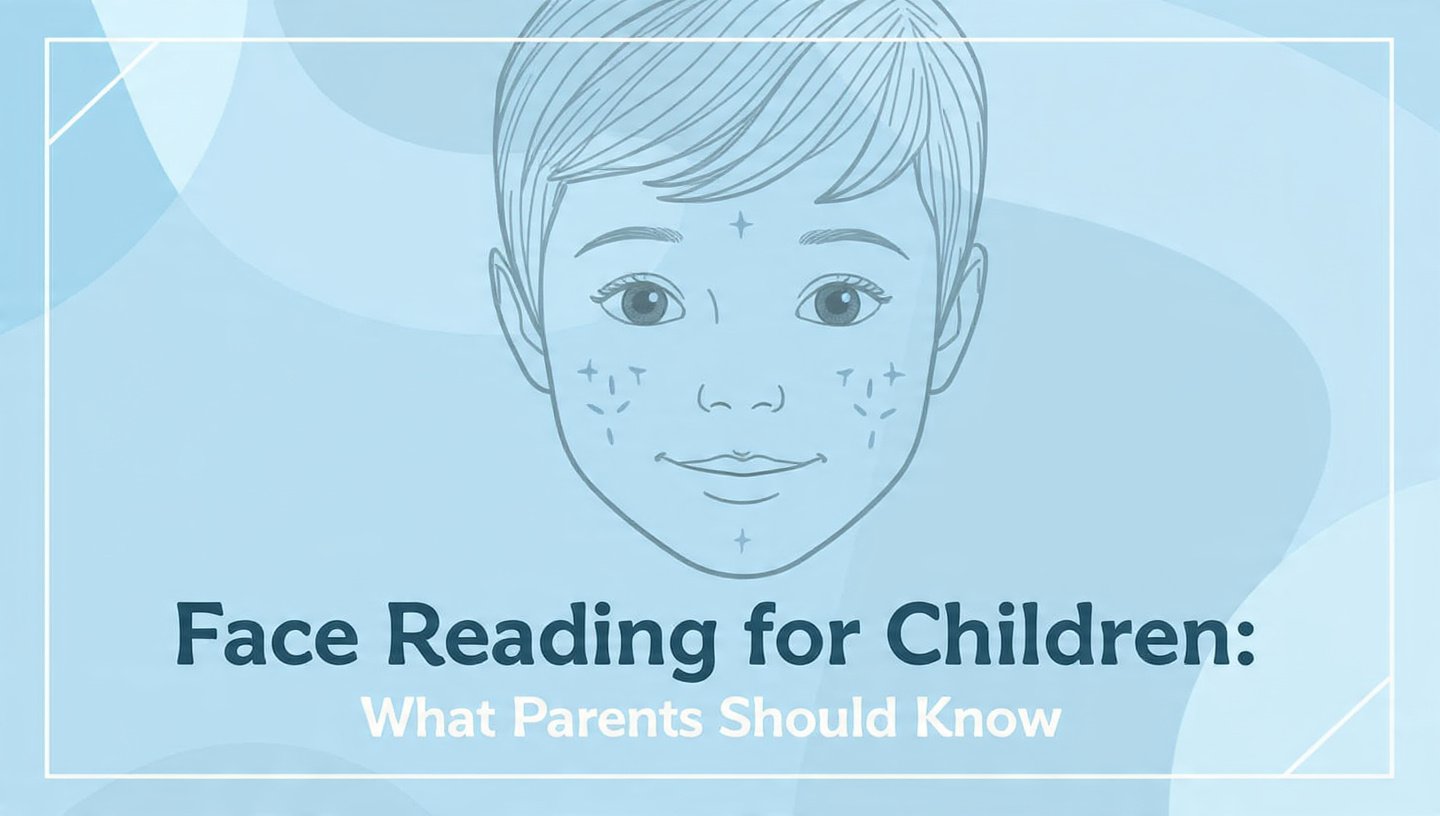
This is where face reading, explained in Samudrik Shastra, becomes helpful.
Not to judge.
Not to label.
Only to understand.
First, understand one important thing
Face reading for children is not about predicting future.
It is not about saying good or bad fate.
Samudrik Shastra clearly says:
Children’s faces are still developing.
So face reading for children is only for:
- emotions
- habits
- stress signs
- communication style
Nothing is permanent.
What is Samudrik Shastra and how it applies to children?
Samudrik Shastra is an ancient Indian knowledge system.
It studies the face, body, expressions, and marks.
For children, Samudrik Shastra focuses on:
- softness or tightness of face
- eye movement
- forehead smoothness
- mouth expressions
These show emotional needs, not destiny.
Why face reading is useful for parents
Let me give you a simple example.
Two children study in the same class.
Same books.
Same teacher.
One child enjoys school.
The other child hates school.
Why?
Because every child processes emotions differently.
Face reading helps parents understand:
- how their child reacts to pressure
- how their child expresses fear
- how their child handles discipline
The most important rule for parents
Never say:
“My child is like this forever.”
Samudrik Shastra clearly says:
A child’s face changes with love, safety, and environment.
Parents shape the face more than fate.
What the forehead shows in children
In Samudrik Shastra, the forehead is called Lalat.
For children:
- A relaxed forehead shows emotional safety
- Constant tension lines show pressure or fear
If a child’s forehead stays tight often, it may mean:
- too much expectation
- fear of punishment
- emotional overload
This does not mean the child is weak.
It means the child needs reassurance.
What eyes tell parents about a child
Eyes are the biggest emotional indicator.
Samudrik Shastra says eyes reflect:
- trust
- fear
- curiosity
If a child avoids eye contact:
- they may feel unheard
- they may feel judged
If a child’s eyes are always alert:
- they may be anxious
- they may be overthinking
Parents should respond with calm, not control.
What mouth and lips show
Lips show expression and communication style.
Children with:
- tightly pressed lips may hold emotions
- open relaxed lips often express freely
If a child does not talk much, do not force talking.
Create safety first.
Words will follow.
What the jaw and chin show in children
The jaw reflects how a child handles authority.
A very tight jaw may show:
- resistance
- pressure to obey
A very soft jaw may show:
- emotional sensitivity
Samudrik Shastra teaches balance, not correction.
Face shape and child personality (basic understanding)
This is only general observation, not labeling.
- Round face → emotionally sensitive child
- Square face → strong-willed child
- Long face → thoughtful child
Parents should support, not change nature.
What about moles and marks on a child’s face?
Parents worry a lot about this.
Samudrik Shastra says clearly:
Do not overthink moles in children.
They change, fade, or shift with age.
Marks are not predictions.
They are just indicators at that stage of life.
Can face reading help with child behavior issues?
Yes, gently.
If a child:
- gets angry easily
- cries silently
- avoids social interaction
Face reading helps parents ask better questions:
“Is my child scared?”
“Is my child overwhelmed?”
“Is my child misunderstood?”
This is awareness, not diagnosis.
A short real-life style example
A mother once said:
“My child is very stubborn.”
When she observed calmly:
- the child’s jaw was tight
- eyes were alert
- forehead tense
The child was not stubborn.
The child was defensive.
After reducing pressure, the face softened.
Behavior changed.
Samudrik Shastra always teaches:
Change environment → face changes → behavior changes.
What parents should never do
Never tell a child:
“You are like this by nature.”
Samudrik Shastra warns strongly against labeling children.
Children absorb words deeply.
Their face reflects emotional memory.
Can parents learn basic face reading?
Yes, and every parent should.
Not to judge.
Not to predict.
Only to listen without words.
Even basic observation can improve:
- bonding
- communication
- emotional safety
Face reading and child confidence
Children feel confident when they feel seen.
When parents notice:
- stress signs early
- emotional overload early
Children grow safer and stronger.
Confidence reflects on the face naturally.
Important reminder from Samudrik Shastra
Children are not finished books.
They are blank pages still being written.
Their face is a mirror of:
- home environment
- emotional tone
- parental behavior
Parents are the biggest influence.
Final thoughts for parents
Face reading for children is not magic.
It is mindfulness.
It teaches parents to pause, observe, and respond with care.
When parents understand emotions early,
children grow with clarity, not confusion.
Want to Learn Ethical & Gentle Face Reading?
If you want a calm, ethical understanding of face reading rooted in Samudrik Shastra, you can explore the work of Ekta Desai.
Official Links:
🌐 Website: https://ekta-desai.com/
📸 Instagram: https://www.instagram.com/ektadesai_facereader
📘 Facebook: https://www.facebook.com/EktaDesaiFacereader
▶️ YouTube: https://www.youtube.com/@ektadesaifacereader
Book an Appointment:
👉 https://ekta-desai.com/book-appointment/
Understanding a child is the first step to raising a confident human.
And every parent can learn that skill.